
Window installation in Yelm, WA
Local Window Installers Serving Yelm for 25+ Years
New windows are only as good as the way they go into the wall. NW Window Installations has spent more than 25 years installing windows in homes and businesses across Yelm, Thurston County and the South Puget Sound, from custom new builds to additions and remodels.
In our climate, installation is where windows succeed or fail. Months of wind-driven rain test every seam around a window opening, and a skipped sill pan, poorly lapped flashing or a gap in the seal can let water work its way into the wall for years before anyone notices. By then, the damage shows up as rotted sheathing, swollen trim, stained drywall or mold. Our installers take the time to do each step right: preparing and sloping the sill, flashing the opening so water drains out instead of in, insulating and sealing the perimeter against drafts, and making sure every window sits level, plumb and square so it operates smoothly for decades.
As a Milgard Certified Dealer with a showroom on Railroad Street in Yelm, we help you pick the right window, measure it precisely, and install it so it stays dry, quiet and efficient through decades of Northwest rain. You can see and operate windows in person, compare vinyl, fiberglass and aluminum frames side by side, and get straight answers about styles, glass options and energy ratings before you commit.
We work directly with homeowners, builders and general contractors, coordinating rough-opening sizes, delivery timing and weather-barrier details so the windows fit the first time and the project stays on schedule. Whether you’re building a custom home in Yelm, adding a sunroom in Lacey or remodeling a kitchen in Olympia, you’ll work with the same locally owned team from the first estimate to the final walk-through, and we’ll stand behind the work long after the job is done.
Get Your Free Window Installation Proposal
Ready to upgrade your windows or doors? Request your free, no-obligation quote today, or call us at (360) 789-9309 to talk with our team.
Why installation matters as much as the window
It’s easy to compare windows by brand, price and energy rating. But the U-factor printed on a window’s label is measured in a lab on a perfectly sealed unit. Those ratings assume the window is installed correctly. Once it’s in your wall, real-world performance depends on how well the gap between the window and the framing is flashed, insulated and sealed. A premium window installed poorly can leak air and water like a cheap one, while a well-installed mid-range window can perform beautifully for decades.
What goes wrong with a poor installation:
- Water intrusion. Rain that gets past missing or reverse-lapped flashing runs down inside the wall, often with no visible sign until sheathing rots or drywall stains.
- Drafts and heat loss. Gaps left around the frame let cold air in, cancelling out the efficiency you paid for.
- Sticking and binding. A window that isn’t set level, plumb and square won’t open, close or lock properly, and stress on the frame can shorten its life.
- Condensation and mold. Air leaks around the frame create cold spots where moisture collects.
- Warranty problems. Manufacturers expect their installation instructions to be followed, and damage caused by improper installation generally isn’t the window maker’s responsibility.
Choosing a frame material
| Material | Best For | Things to know |
|---|---|---|
| Vinyl | Most homes and budgets | Low maintenance, good insulation, wide color range |
| Fiberglass | Large openings, dark colors | Very stable in temperature swings; slimmer frames, more glass |
| Thermally improved aluminum | Modern styles, light commercial | Slim sightlines; thermal break reduces cold-frame condensation |
Reading the energy label before you buy
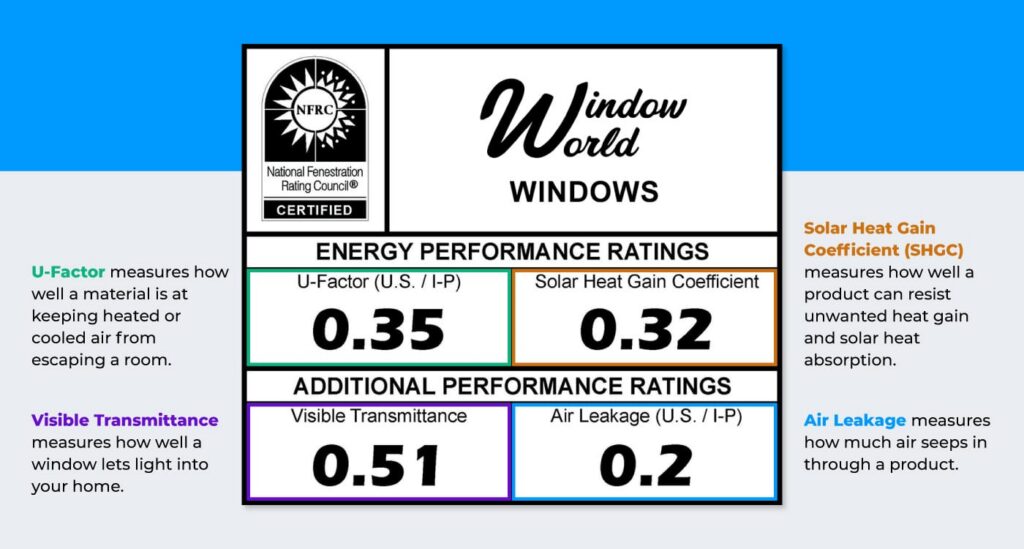
Every qualifying window carries a label from the National Fenestration Rating Council (NFRC), an independent group that tests and certifies window performance. Two numbers matter most:
- U-factor measures heat loss. Lower is better, and it matters most in our heating-dominated climate.
- Solar Heat Gain Coefficient (SHGC) measures how much of the sun’s heat comes through. In Western Washington a moderate SHGC can provide welcome winter warmth on south-facing walls.
ENERGY STAR sets separate performance criteria for each U.S. climate zone, and the U.S. Department of Energy’s Energy Saver guide explains how windows affect heating and cooling costs. Washington also has its own energy code for new windows, which permitted projects must meet. We’ll show you the label for every option we quote.
Window installation - FAQS
How long does window installation take?
Most homes take one to two days once the windows arrive. Custom sizes and specialty shapes take longer to manufacture, so we confirm lead time at ordering.
Do I need a permit to install new windows?
New or enlarged openings usually need a building permit. We'll tell you what applies at your address and can coordinate with your builder.
Can windows be installed in the rain?
Yes, with care. We stage work to keep openings covered and only open what we can close the same day.
What warranty comes with Milgard windows?
Milgard backs its windows with lifetime coverage for homeowners; the exact terms vary by series. See Milgard's overview and we'll walk you through the warranty for the series you pick.
Are there rebates for new windows?
If you're replacing existing windows and PSE supplies your heat, you may qualify for a PSE rebate. Details are on our window replacement page.
What's the difference between new construction and replacement windows?
New construction windows have a nailing fin around the frame that attaches directly to the wall framing and is flashed into the weather barrier before siding goes on. They're used in new homes, additions and full-frame replacements. Replacement (retrofit) windows are built to fit inside an existing frame without removing siding or trim. We'll recommend the right type for each opening.
What window frame material is best for Western Washington?
Vinyl is the most popular choice here because it insulates well, never needs painting and stands up to moisture. Fiberglass is very stable through temperature swings, handles dark colors well and allows slimmer frames with more glass. Thermally improved aluminum suits modern designs. All three can perform well when properly installed.
Should I choose double-pane or triple-pane glass?
Quality double-pane glass with Low-E coatings and argon gas meets the needs of most homes in our mild, wet climate. Triple-pane adds extra insulation and noise reduction, which can be worth it for rooms facing busy roads, the railroad or harsh weather.
Will new windows reduce outside noise?
Usually, yes. A well-sealed installation with insulated glass blocks noticeably more sound than old single-pane or leaky windows. Laminated or triple-pane glass reduces noise even further.
What size windows do bedrooms need?
Building codes require at least one emergency escape (egress) window in each bedroom. Under the International Residential Code it generally needs a net clear opening of at least 5.7 square feet (5.0 on the ground floor), at least 24 inches high and 20 inches wide, with a sill no more than 44 inches above the floor. Casement windows often meet these requirements in smaller openings because the whole sash swings open.
How do I care for my new windows?
Wipe the glass and frames with mild soap and water, vacuum the tracks and sills a few times a year, and keep the small weep holes at the bottom of the frame clear so water can drain. Check exterior sealant once a year and operate every window periodically to keep hardware working smoothly.
How should I prepare my home for installation day?
Clear about three feet of space inside each window, take down blinds, curtains and wall hangings nearby, and keep pets and children away from work areas. Let us know about alarm sensors on your windows so they can be disconnected and reinstalled. We protect floors and furniture and clean up when we're done.
Areas We Serve NEAR Yelm
Yelm, Rainier, Roy, McKenna, Tenino, Lacey, Olympia, Tumwater and communities throughout Thurston, Pierce, Lewis, Mason and Grays Harbor counties.